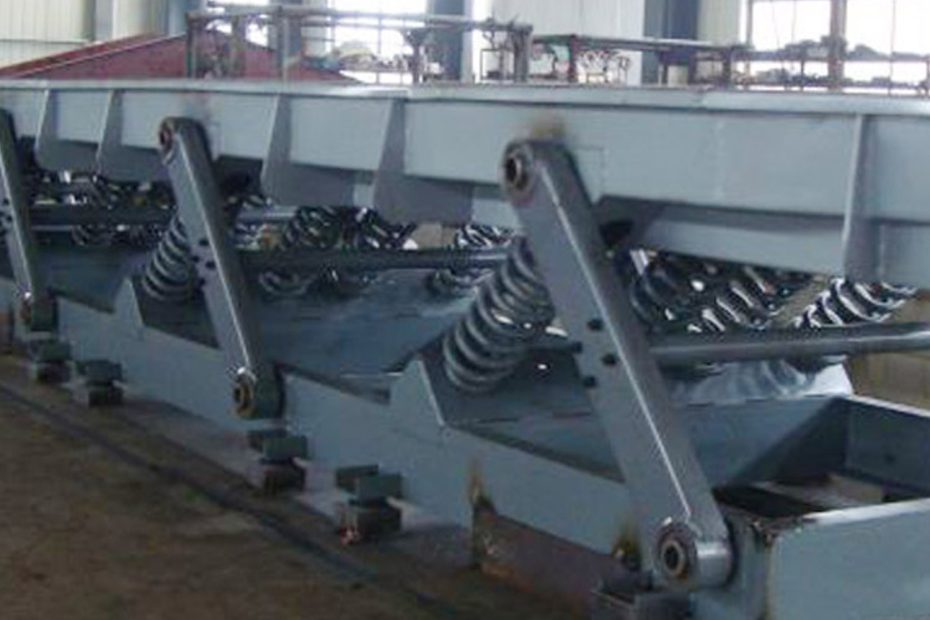
At first glance, Hydraulic forging hammers and vibratory conveying machinery serve distinctly different functions in industrial production. Hydraulic forging hammers belong to the heavy forming sector, where they shape metal components under immense, controlled force. In contrast, vibratory conveying machinery operates within material handling systems, transporting bulk materials through carefully regulated vibration.
Rather than interacting directly on the production floor, hydraulic forging hammers influence vibrating conveying machinery at the component level. Through advanced metal forming, forging technology strengthens the structural backbone of vibration equipment and enhances long-term reliability.
Vibrating Conveying Machinery :Operating Principle and Industrial Applications
Vibrating conveying machinery moves bulk materials such as ores, aggregates, coal, chemicals, grains, castings, and recycled materials by generating controlled mechanical vibration. Instead of relying on rotating belts or screws, these systems use oscillatory motion to propel materials along a trough.
Industries such as mining, metallurgy, power generation, foundries, chemical processing, and food production widely adopt these systems. Their simple mechanical structure, relatively low energy consumption, and ability to handle abrasive or high-temperature materials make them highly suitable for harsh industrial environments.
The Mechanical Demands of Vibrating Conveyors
Vibrating conveying machinery operates under constant cyclic loading. Eccentric shafts generate vibration forces, springs absorb and release energy, excitation frames transmit oscillatory motion, and trough bodies endure repeated impact from bulk materials.
Over time, these dynamic forces create fatigue stress within load-bearing components. If materials lack sufficient strength or internal integrity, micro-cracks form, propagate, and eventually lead to structural failure.
Therefore, equipment manufacturers must select manufacturing processes that enhance fatigue resistance and structural durability. This requirement leads directly to the relevance of hydraulic forging hammers.
How Hydraulic Forging Hammers Contribute to Component Strength
Hydraulic forging hammers apply hydraulic pressure to drive a ram that delivers precisely controlled impact energy onto heated metal billets. Unlike traditional mechanical hammers, hydraulic systems allow operators to adjust force, stroke length, and frequency with high accuracy. This flexibility ensures consistent forging quality across a wide range of component sizes.
Moreover, hydraulic forging technology produces parts with refined grain structure, high density, and superior mechanical strength.. It aligns grain flow with the geometry of the part, eliminates internal voids, and increases density. As a result, forged components exhibit superior:
- Fatigue resistance
- Impact toughness
- Structural consistency
- Load-bearing capacity
These properties directly address the performance challenges found in vibrating conveying machinery.
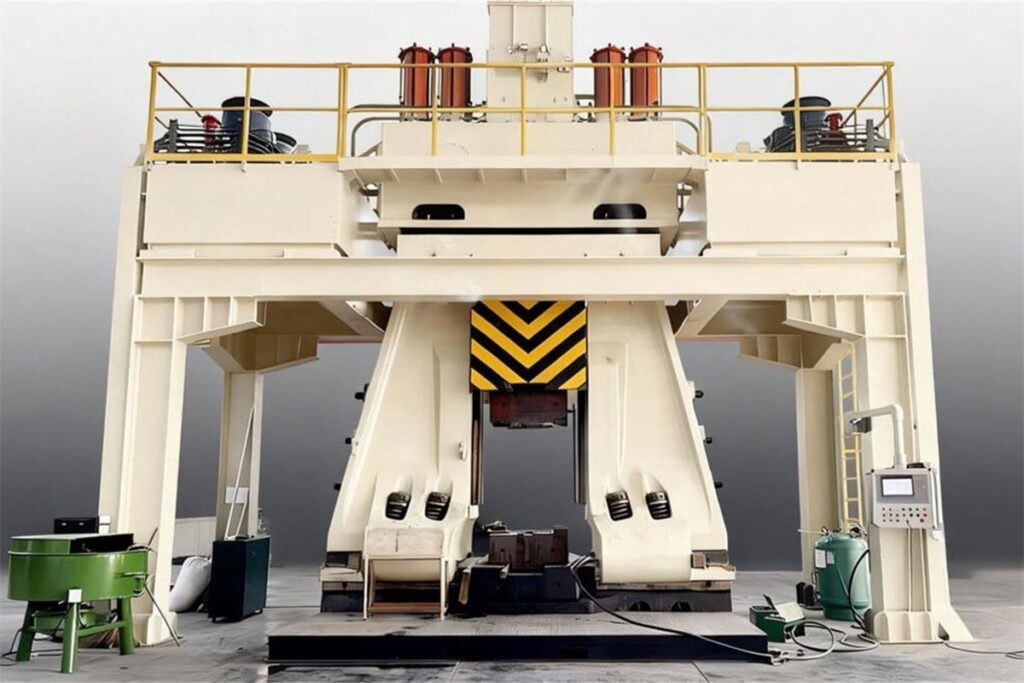
Key Areas of Relevance Between Forging and Vibrating Conveyors
- Forged Eccentric Shafts — Eccentric shafts generate the vibration that drives material movement. Because these shafts rotate continuously under high stress, they require exceptional torsional strength and fatigue resistance. Hydraulic forging hammers produce shafts with optimized grain flow, allowing them to withstand prolonged cyclic loading.
- Forged Excitation Frames — Excitation frames transmit vibratory forces throughout the system. Manufacturers often use forged structural components to prevent deformation and reduce stress concentration under long-term oscillation.
- Forged Bearing Housings — Bearing housings maintain alignment and absorb vibration forces. Forged housings offer higher structural integrity than cast alternatives, reducing the risk of cracking and premature wear.
- — Dynamic linkages and mounting supports experience repetitive loading during operation. Forging enhances their durability and minimizes failure risks in demanding environments.
Through these applications, hydraulic forging hammers contribute directly to the mechanical reliability of vibrating conveying equipment.
Comparative Perspective: Forged vs. Non-Forged Components
| Component Requirement | Forged Components (Hydraulic Hammer) | Cast or Fabricated Components |
| Fatigue Resistance | Excellent due to aligned grain flow | Moderate to low |
| Vibration Tolerance | High structural integrity | Higher risk of micro-cracks |
| Dimensional Stability | Strong consistency under cyclic loads | More prone to deformation |
| Service Life | Extended operational lifespan | Shorter replacement cycles |
| Maintenance Frequency | Reduced downtime | More frequent inspections |
Conclusion
Hydraulic forging hammers and vibrating conveying machinery may belong to different industrial categories, yet they share a significant. Forging technology strengthens the structural components that enable vibrating conveyors to operate safely and reliably under continuous cyclic stress.
By improving fatigue resistance, structural integrity, and service life, hydraulic forging hammers support the long-term development of vibration-based material handling systems. Although this relevance remains indirect, it plays a foundational role in ensuring equipment performance and operational stability.